Come See our New Website

Friday, May 28, 2010

News Around the Net

Should we bring back memorizing poetry in the classroom?  Maybe.  Should someone memorize The Faerie Queene to stick it to the guy who memorized Paradise Lost?  Absolutely.

How would you kick off New York's Book Expo?  A Conversation with Barbra Streisand?  Your mind has been read.  You don't have to read the whole thing (I didn't), just know that it happened.

Haiku, fake book titles, book clubs.  Twitter literary games.  These are cooler than Barbra Streisand, I promise.

Britain's poet laureate Carol Ann Duffy will judge an international John Lennon inspired poetry contest this summer.  It will culminate in a Performance Poetry Slam in November.  Anyone is free to enter!


Bad writing: A documentary.  And a short lesson from George Saunders.  Always worth it.

If you want to go to the book expo in New York, but hate all the crowds, maybe you should check out the digital book zone.  It might be nice because, well, there's no one there.  Feel the revolution!  E-books!  The future!

Thursday, May 27, 2010

Reviewpoints #2 Issue 46: Ari Sen on Clare Beams

Continuing our new blog series Reviewpoints, Fiction Editor Ari Sen tells us why he decided on "We Show What We Have Learned" by Clare Beams for HFR. Clare talks about the genesis of the story in our first Reviewpoints post here.


When we receive a story at HFR, it usually goes through a series of steps before the rejection or acceptance emails/ letters are finally sent out. Associate editors read batches first. The submissions they pick out as promising are then sent to the prose editors, who read them all, rank them, and wait till every story is read twice or thrice till decisions are finally made.

When we received Clare Beams’ story, "We Show What We Have Learned," it came with a note saying we simply had to read the story immediately. Because it was short, and because I am lazy, it was the first one I read in the pile. Ten minutes later I gave it to Brian—the other prose editor. Twenty minutes after having first received the story, I was emailing Clare with news of our acceptance.

It is not just that the story is weird in a way that is refreshing in literary fiction. It’s not weird for the sake of it—it’s weird because it has to be. It’s weird because in 5 short pages it has to be surreal and disturbing and heart-rending at the same time. It’s weird because it’s so goddamn well-written, because underneath the situation Clare explores is a beating, pulsing heart that is the reason we read, because as writers we know how hard it is to make something appear so easily written. It’s weird because we follow its story—funny, strange, outrageous—all the way until the end where we pause a moment, knowing what will happen, and then it doesn’t. What happens is better. Good fiction surprises us and makes us think when we have finished reading it. Clare’s fiction surprised us and made us think while we were reading it. And it kept surprising us. I’ve read the story a few times since deciding we wanted to publish it. It gets better every time. It’s not a weird story. It’s just a good story. That happens to be weird. Which is why we love it.

Click here to read "We Show What We Have Learned" as part of our online content for Issue #46. To make sure you don't miss another story like it, click here to subscribe. Join us next week as Poetry Editor Rose Swartz and poet J.D. Schraffenberger discuss his poem "I Memorized a List."

Wednesday, May 26, 2010

Reviewpoint #1 Issue 46: Clare Beams

Reviewpoint is a new feature on the HFR blog. We often get asked "What do you look for in a submission?" While we're always glad to talk about the magazine (especially if it gets you to subscribe!), we wanted to take the dialogue beyond the usual "Here's what we're looking for..." post. We publish work that affects us deeply as readers, so to invoke that experience we'll be talking about why we chose specific pieces for HFR. That means bringing the contributors in on the conversation, so to start off, Claire Beams discusses the genesis of the powerful story "We Show What We Have Learned" from issue #46.

After I finished my MFA, I began teaching high-school English at a small and wonderful school on Cape Cod, where I’ve been ever since. Two big things about the job have surprised me: how all-consuming it is (I’ll be done every day at 2:30! I had thought. I’ll have so much time to write!) and how much I love it. Teaching has been like receiving an extravagant, unexpected, and outsized gift: it’s dazzling in ways you couldn’t possibly deserve, and you feel incalculably richer just for owning such a thing; it just may or may not go with anything else you happen to have in the living room.

I wrote “We Show What We Have Learned” at the end of my third year. For about a year before writing the story, I had been trying, with mixed success, to claw my way back into some semblance of a writing routine. I’d mostly been reworking pieces that I first wrote during grad school, and I thought I had at last come to an understanding of what ailed some of them, but the process of curing those ailments was slow and painstaking. “We Show What We Have Learned,” which began as an idea I had while waiting to fall asleep one night, felt refreshingly different from all of that. The whole premise struck me as a kind of dare, something I wasn’t at all sure would work on the page. I wrote it mostly to see if I could. The final story has (thankfully) very little to do with any teaching experience I’ve ever had. But within it are heightened versions of some of the ideas teaching has made me consider: the way parts of our lives can become little worlds unto themselves, governed by their own rules, and the ways in which, through the daily frictions of interacting, we shape and mark each other. I’m tremendously grateful to everyone at HFR for supporting this story.

Check back with us tomorrow as we continue Reviewpoint with Fiction Editor Ari Sen writing about why he decided to publish Clare's story.

Tuesday, May 25, 2010

Jocelyn Lee

We're happy when our contributors receive accolades for their work in HFR. It's nice to know our faith and appreciation for our contributors is matched by other's admirations. So we're proud to mention that Jocelyn Lee, an artist that will be appearing in upcoming Issue 47, is now showing her work at the Pace/MacGill Gallery in New York City. Experience Jocelyn's photographs on the gallery website and then be back when #47 hits the streets for more of her excellent photography.

Unusual Calls for Submissions

In October 2010, Iron Horse Literary Review will publish a Facebook Issue. We’re looking for stories, poems, and essays that parody or make use of Facebook paraphernalia—the quizzes (i.e., What Famous Novel Are You? or Have You Done It?), 25 Random Things lists, status updates, profile pictures, any and all things FB. You can write about your FB experiences, as well, but we’ll be wary of those experiences that seem stereotypical or are represented in a stale fashion. Surprise us! Be creative! Show off your artistry! Your stories must tell a story, your essays must flesh out an idea fully, your poems must be poems—so write for us some beautiful literary masterpieces. The cover will be a collage of profile pics. Submission Deadline: June 1, 2010, 5:00 p.m. And we do pay our contributors: $40 for poems and short-shorts; $100 for prose pieces. We'll also be putting together an AWP panel called In Your Face. So please submit early if you want to be considered for that panel. Send mss to: Iron Horse Literary Review, The Facebook Issue, English Department, Texas Tech University, Mail Stop 43091, Lubbock, TX 79409-3091.

2010 Inglis House Poetry Contest Guidelines
Each year for the past seven years, the Inglis House Poetry Workshop has sponsored an annual contest on disability-related poetry. The purpose of the contest has been two-fold. The first is to promote the writing of poets with disabilities and put their names and poetry before the public. The second is to encourage all writers to think about the issues surrounding and try to respond to them in their poetry. It goes almost without saying that submissions should avoid both cliches and stereotypes about disability. There are two categories for submission. A writer with a disability may submit to either or both. The guidelines for the 2010 contest are listed below. Rules: Any style poetry. Two Poem Limit. Each poem on separate page. Poem length - 75 lines or less. Name, address & category on each page. Poem must relate to disabilities. Category 2: Open Only to Writers With Disabilities. Deadline: June 1, 2010. Mail entries to:Inglis House Poetry / Contest / 2600 Belmont Ave. / Philadelphia, PA 19131 or Email to inglispoetry(at)hotmail.com (replace (at) with @)

WAR POETRY CONTEST - LAST CALL
Ninth year. Fifteen cash prizes totaling $5,000. Top prize $2,000. Submit 1-3 unpublished poems on the theme of war, up to 500 lines in all. Winning entries published online. Sponsored by Winning Writers, one of the "101 Best Websites for Writers" (Writer's Digest, 2005-2009). $15 entry fee, payable to Winning Writers. Postmark deadline: May 31. Final judge: Jendi Reiter. Include cover sheet with contact information. No name on poems. Submit online or mail to Winning Writers, Attn: War Poetry Contest, 351 Pleasant Street, PMB 222, Northampton, MA 01060. More information: www.winningwriters.com/war

BLR Literary Prize Guidelines
$1000 Marica and Jan Vilcek Prize for Poetry ~ Judged by Marie Ponsot
$1000 Goldenberg Prize for Fiction ~ Judged by Andre Dubus III
$1000 BLR Prize for Nonfiction ~ Judged by Jerome Groopman
BLR Prize awards outstanding writing related to themes of health, healing, illness, the mind, and the body. First prize is $1000 (in each genre) and publication in the Spring 2011 issue of the BLR. Prose limited to 5000 words. Up to 3 poems (maximum 5 pages). Submissions that exceed these limits will be disqualified. Deadline July 1, 2010. Winners will be announced by December 31, 2010. Entry fee is $15 per submission. For an additional $5, you will receive a one-year subscription to the BLR. (Maximum: two submissions per person). More here.

Daily Bread Contest: Short Essays of Workplace Humor. We're looking for true-life tales about bizarre tasks, wacky work environments, and ludicrous predicaments you've gotten into while trying to earn a living. Original work only. Maximum length: 1,000 words. You may enter up to three essays. Awards: $200, $100, $50. Entry fee: $5 per essay. Deadine: June 1, 2010. Info:
http://laughatlifebooks.blogspot.com

Friday, May 21, 2010

News Around the Net

To unpublished poets who are 97 years old or younger: It's not too late!

And while you're on your way to being a 97 year old unpublished poet, here's a new job you have a chance at!  I mean, most of you have to be better than this.


Steph Bowe tells us it doesn't matter if you're 15 when you get your book deal (like she was) or if you're 19, both are totally cool.  This made me cry at "If you reach legal age without a book on the shelves, guess what?  It doesn't matter."

At Chuck Palahniuk readings, you have the chance to win a signed, inflatable plastic turkey.  Just try not to pass out while blowing up the inflatable statue during the contest to get the inflatable turkey.  Because that would be embarrassing and demeaning.


Magnet poetry.  Did I just spend a half an hour creating semi-coherent sentences?  Maybe.  Or maybe it was an hour.  Don't judge me.

Thursday, May 20, 2010

Website of the Week: Wondering about One-hit Wonders


This list from the Huffingtonpost of literary one-hit wonders has me feeling contentious. "Hit" seems to be a poor way to judge books, whose influence can build slowly over time. Many good books are shoved under the rug to make this list work. Salinger's Glass novels, Fitzgerald's Babylon Revisited, and Heller's God Knows, just to name a few. Read it and weep.

Wednesday, May 19, 2010

Adam's Rap on Off-Broadway

Since we've been thinking a lot of works inspired by other works since Issue 46, we were interested in this article about Adam Rapp's new play The Metal Children. It was inspired by Rapp's own experiences with the reception of his young adult novel in a Pennsylvania suburb. It touches on a lot of other issues we love: censorship and the relationship of writer to reader. We wish Mr. Rapp luck.

Tuesday, May 18, 2010

Deform This Book!

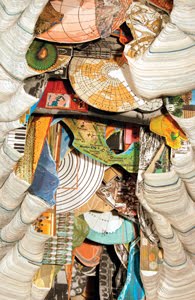
We've received the following from Gretchen Henderson, with whom we had a lovely conversation at AWP about our Brian Dettmer cover for Issue 46. She is looking for help with an unusual book project of her own:

Invitation: DEFORM THIS BOOK!

Artists and writers of all bents are invited to participate in the material deformation of the Galerie de Difformité (synopsis here, forthcoming from &NOW Books, with distribution by Northwestern UP). Deformations received by JUNE 1, 2010 will be considered for inclusion in the published book; all submissions received thereafter will be included in the online gallery. Directions to participate can be found here, and the book's deformation can be followed by joining its Facebook page. The Galeriede Difformité will deform in stages; subsequent invitations will be included in the published book. Submissions and questions should be directed to the Undertaker: difformite@gmail.com. Thank you, and please spread the word!

Friday, May 14, 2010

News Around the Net

People, welcome to Twilight World.  Take a look at the top name for boys and girls in 2009.  Shake your head sadly at your discretion.

Here's a fun essay on bad writing.  Does this mean that if I think I'm good, then I'm bad, but if I think I'm bad, then I'm good?  Because I'm fiercely mediocre.  Where does that leave me?

Fellow HFR person Aaron asked me last week whether free books can be considered "bestselling".  A good point.  Amazon does not believe so.

If you thought it couldn't get worse than that time you found Hilary Duff was writing a novel (the wait is down to 151 days! Do I have a paper chain to keep track?  Maybe.), if you thought that was as bad as it could get, then, well, you might want to avert your eyes.  Just skip this one altogether, honestly.  It'll be for the best.

Opinions on the funniest books of all time.  I think they're talking intentional comedy, so maybe not Elixir (151 days!).  I'm behind the guy who said How I Became A Famous Novelist by Steve Hely.  Absolutely hysterical.

Here's a conversation we all need to stop having.  Of course poetry matters!  And where did David Foster Wallace get the nerve to criticize other writers for "forgetting the reader"?  Does anyone know an "average reader" who reads DFW books?  Now I'm all worked up.

Thursday, May 13, 2010

Wears Waldo

The intrepid Mike Pitoniak has already posted on one marque of literary T-shirts in his acid but excellent News Around the Net for us in March. Since then, it looks like another book-related clothier has entered the market: Out of Print Clothing. While KafkaCotton's shirts were more symbolic representations of literature, Out of Print is licensing old cover art from classic books themselves. The results are satisfying. I'm eyeing at least four of the designs myself, Now all I need is $112 dollars plus tax to cover the cost. Helping to ameliorate the burn is the knowledge that some of my dough will be used to buy books for kids who need them.

Tuesday, May 11, 2010

Website of the Week: Calibre


So you have your Kindle, or your Nook, or your Sony Reader. Or all of them. And you also have a passel of ebooks in different formats. How to organize everything into a cogent library? Enter Calibre, an ebook Manager. It downloads metadata on your books, allows you to store books on your computer and browse them, and can even change the format of the ebook. Want to change Kindle to ePub? Nook to Sony Reader. Even the iPad. Done with a click. You can check out more features on the 16 minute demo on the home page or read this independent review at LifeHacker.

I like this because it puts the control ebooks back into the hands of the reader, not Amazon, Google, or anyone else. Calibre will also pull reading content from the web, perhaps opening the door to small publishers and magazines down the line to easy distribution. That sounds good to us.

Jobs!

UNIVERSITY OF WISCONSIN-MARATHON COUNTY
The University of Wisconsin-Marathon County and the University of Wisconsin Colleges English Department invite applications for a position as full-time lecturer. The UW-Marathon County campus is one of 13 campuses that comprise the UW Colleges, a freshman-sophomore transfer institution within the UW System. UW Colleges offers an excellent liberal arts and pre-professional education for students beginning work toward a bachelor's degree. APPOINTMENT: Full-time lecturer position for the 2010-2011 academic year. Contract year is August 25, 2010 to May 24, 2011. This position is filling a vacant tenure-track position. We expect to fill this position with a tenure-track faculty hire within the next two years and the person hired at this time may be considered if criteria are met. QUALIFICATIONS: Ph.D., MFA, or other terminal degree in English required, with a concentration in Creative Writing. A record of successful teaching in first-year composition is preferred. RESPONSIBILITIES: Normal teaching load is 12 credit hours per semester. Scheduled course load includes first-year composition, creative writing, intermediate composition, and the literary magazine course. APPLICATION Applications are due by Sunday, May 16, 2010 for assured reconsideration. Review of applications will continue until the position is filled. Electronic submission requested. Submit the following materials in PDF or Microsoft Word to holly.hassel(at)uwc.edu>(replace (at) with @): * Letter of application * Curriculum vita * One-page statement of teaching philosophy * Contact information including email addresses for three current references * Unofficial graduate transcripts. Materials that cannot be sent electronically may be mailed to: Charlene Schmidt / UW-Marathon County / 518 S. 7th Avenue / Wausau, WI 54401. Please call 715-261-6221 if there are questions about submitting application.

Announcement of Position Vacancy, Arts & Sciences Distinguished Visiting Writer
The English Department of Bowling Green State University seeks strong applicants for the College of Arts & Sciences Distinguished Visiting Writer. Duties: The Creative Writing Program at Bowling Green State University seeks a distinguished visiting fiction writer who can contribute to both its undergraduate and graduate instructional programs as well as enhance its national reputation. The successful candidate will be in residence spring 2011; teach one fiction writing workshop in our BFA program and one workshop in our MFA program; give a public reading and a lecture; and advise theses. Qualifications: 1) MA, MFA or Ph.D. by time of employment. 2) At least one book of fiction and critical recognition consistent with a writer of national reputation. 3) Evidence of outstanding teaching. Salary: Competitive. Effective Date of Employment: The starting date of employment is January 2011. Submit application materials to: Send cover letter, CV, transcripts, three current letters of reference, writing sample (one book), a list of courses taught with brief descriptions, and 1-2 samples of undergraduate syllabi to Kristine Blair, Chair, English Department, Bowling Green State University, Bowling Green, Ohio 43403-0191. The starting date of employment for this position is January 2011. Screening of applicants will begin June 14, 2010 and continue until the position is filled. BGSU is an Equal Employment Opportunity/Affirmative Action Employer and encourages applications from women, minorities, veterans, and individuals with disabilities.

Visiting Professor (Open Rank) - Poetry, Institution: Oklahoma State University
One year appointment or two one-semester appointments, rank open, beginning August 2010. MFA or Ph.D. in Creative Writing with significant poetry publications and teaching experience required. Teaching 2 workshops per semester. Salary competitive. For further information on the department, see our web page at http://English.okstate.edu. Send letter of application, cv, and writing sample to Carol Moder, Head, Department of English, Oklahoma State University, Stillwater, OK 74078-4069. To ensure full consideration, applications must be received by May 3, 2010. However, we will continue to accept and consider applications until the position is filled. Filling of this position is contingent upon availability of funding. OSU is an AA/EEO/E-verify Employer committed to Diversity, and OSU Stillwater is a tobacco-free campus.

The Liberal Arts Department at D'Youville College is seeking an Assistant Professor of English beginning August 2010. Job Details: Experience in teaching Composition, Creative Writing, and/or Technical Writing required. Experience or interest in teaching third world literature a plus. PHD required. Online applications preferred to humanresources(at)dyc.edu (replace (at) with @). Review of applications will begin on May 1, 2010. How to Apply: Candidates are asked to submit a letter of application, curriculum vitae, along with the names and contact information of three references to the attention of Dr. M. Ruth Kelly, Chair, Department of Liberal Arts. Candidates of diverse backgrounds are encouraged to apply. For more information see dyc.edu. Application Information. Postal Address: Linda Moretti / Office of Human Resources / D'Youville College/ 631 Niagara Street/ Buffalo, NY 14201. Phone: 716-829-7811.

Full-Time Temporary English Instructor or Assistant Professor, Framingham State College
The English Department invites applications for a one-year, full-time appointment starting September, 2010, to teach creative writing, first-year writing, and literature. The course load is 3/3 and includes two sections of first-year composition, one literature course, and three creative writing courses. Framingham State College is a wireless, laptop campus and welcomes instructors with experience using computers in the classroom. A terminal degree is required, with preference given to applicants with a Ph.D. in literature. We seek a colleague with demonstrated excellence as a teacher of the writing of poetry, fiction, and non-fiction; first-year composition courses; and literature, preferably modern and contemporary British, European, or American literature. Review of applications begins immediately and continues until the position is filled. Application materials received by May 15, 2010 will be guaranteed full consideration. Candidates should demonstrate their writing accomplishments in at least two genres by submitting ten pages of poetry and twenty pages of prose fiction or non-fiction, either published or unpublished. Please send a letter and vita to http://framingham.interviewexchange.com; and a dossier, including three letters of recommendation and transcript, and a writing sample to Professor Elaine Beilin, Chair, English Department, Framingham State College, 100 State Street, Framingham, MA 01701.

Friday, May 7, 2010

News Around the Net

Which stories from your childhood still make the room all dusty for you?  Where the Red Fern Grows, anyone?  How dare they make me read that in elementary school!

Here's something unexpected: ESPN the Magazine is running a sports-themed short fiction contest this summer.  Check out the details.

There's something interesting about the top ten books on Kindle.  They're all free.  Feel the e-book revolution!  It cannot be stopped.

And speaking of the revolution, Google is joining in.

One Book, One Twitter, whose goal is to be the world's biggest book club, has chosen Neil Gaiman's American Gods as their first reading.  If you want in, you can go here.


Last, but certainly not least, here's a video of William Burroughs shooting a Shakespeare poster.  Because we can.

The Piper Center Celebrates "Poem In Your Pocket" Day!

I know all of you have been sharing those poems you've kept handy for National Poetry Month's Poem In Your Pocket Day with just about everyone you meet. The Piper Center's been keeping up with the festivities as well--so what if we're a week late? Here's some of our favorites!

Beth Staples
I've got two, and I can't seem to decide: "[nor can love be proven except by act]" by Emily Carr, from Issue #45, and "Under the Rug" by Lauren Henley from Issue #46. Both have this incredible urgency about them. I love how Emily's starts with a plea, to look at our "want & not wanting." I love that combination of feelings: tragedy and breath. Lauren's is more disturbing, but there's a mystery to it, and a strength.
Under the Rug

The night before I leave you for good,
I'm driving us home from a party
because you've gotten stupid again,
insisting you weren't the fool
of the evening, certain you didn't
piss in my friend's vegetable patch
and break two glasses. All lies
you say. We get home, you puke
into the drapes, hide them somewhere
I can't see. I scrub the wall
and you tell me it wasn't you,
it was me. I spend the night searching
for the drapes, checking all
the garbage cans while you sleep,
looking through closets, cupboards.
There is no moon to light my way,
I stumble through the dark calling out
for the drapes. In between meals and chores
I hunt for them, imagining how foul
they must be. I'm about to give up
and then-a trapdoor under the rug...
it leads down a bright tunnel to a pile of junk.
The drapes are there, clean and spotless.
Nothing makes sense. I come back up
and scream for you to hit me.
Hit me. Hit me. And you do.


Elizabyth Hiscox
I don’t like to outright apex, if possible. For poem-in-your-pocket day I will assume that all my pockets are full of poems (on any given day I usually have at least four pockets from which to choose) and that I've grabbed these two first. Each of these poems was originally brought fully to my attention by a friend, so the attractions aren't mine alone although the reasoning might be.

Adrienne Rich's "For This."
The close of the poem where the equation between art and salvation is made swiftly and with force while somehow circumventing the melodrama that necessarily accompanies both those concepts.

Gary Snyder’s "Mid-August at Sourdough Mountain Lookout."
It smacks of a romantic American West, but in ways that ring true for me. There’s the serenity at the cusp of a wild (fire) season. The revelations of isolation.


Sean Nevin
My poem is "Brothers Playing Catch on Christmas Day" by Gary Short. I guess it's the emotion, that Nevada-ghost-town nostalgic melancholy that somehow smacks of what Jane Kenyon or Anna Akhmatova do at their best. It's the same seemingly simple structure and diction, plane even, (that is until one tries to replicate it) that can blindside the reader. The sheer psychic weight of this poem and the love between brothers is so compressed it is not just held in the concrete object of the football but the flashes of the spiraling, soon-to-be invisible "clean white laces" of the ball that rescue it (and us) from the sentimental.


Amanda Monrad
This, "Let America Be America Again" by Langston Hughes is not my favorite poem. This is a poem I love and reread the other day in light of what’s been happening in Arizona recently. It resurfaced for me just prior to the 2008 election and found it to be a true motivator, for me a true symbol of the change we were all looking for so desperately. It’s a poem that moves me by a poet whom I love dearly. (PS - It might not fit in your pocket.)


Tom McDermott
I have a 18 month old beagle (Hank) that I can’t help but think about when I read "Verse for a Certain Dog" by Dorothy Parker. I can picture his confident strut with his head held high when I read the line 'High in young pride you hold your noble head'. That is of course until he hears an oncoming skateboard and runs for cover!


Aaron Falvey
"Junk" by Richard Wilbur: It's a perfect marriage of antiquity and modernity through judicious use of refuse.


Mike Pitoniak
"Happiness" by Raymond Carver. To be brief, I love that last stanza. Just awesome.


Colin McGann
"Learning to Swim" by John Burnside.
Trying to seem unconcerned, but numb with the fear
that he'd killed me, the glare of his laughter
dying away in the hollows and nooks of the roof
and everything silent...
I really like this line and poem because I teach swim lessons at a pool over the summer and it frightens me how many people have horror stories about how they learned to swim. The fear that consumes someone when they first learn to swim is something that is very immediate in my mind and I like how Burnside captures it here.


Maleri Sevier
A piece by Dorothy R. Parker:
Razors Pain you;
Rivers are damp,
Acids stain you:
Drugs cause cramp.

Guns aren't lawful;
nooses give.
Gas smells awful;
You might as well live.


Erik Daniel Smith
"Genius" by Mark Twain: When I (Brittany) first asked Erik why he picked this particular poem, he replied, "Because you made me choose one." When I tried to pry further, all I got was, "Because Mark Twain kicks ass." Hear, hear.


Amy Ledin
"Kubla Khan" by Samuel Taylor Coleridge.


Brittany Herman
"Other Lives and Dimensions and Finally a Love Poem", by Bob Hicok. There's this longing contentment throughout the voice: it's lost. It longs for theoretical physics, for how hands mourn (by praying or clapping), for "a Bronx where people talk / like violets smell", and finally for "each of the places we meet." Oh, and that opening.

Tuesday, May 4, 2010

Green Head Guy meets the New York Times

HFR #43 cover artist Levi van Veluw is a featured artist in yesterday's New York Times article, "Of Compost, Molecules and Insects, Art Is Born" which takes a look at "art that was once alive." Issue #43, known affectionately around here as "the green head guy" issue, features a self-portrait of van Veluw with all kinds of organic material (and inorganic material, like plastic sheep) actually glued to his face. The article describes the finished portrait as "a kind of Julius Caesar Chia Pet." Check van Veluw's website for other self-portraits. Check out the NYT article for some insight into the trend and some other really cool artists like Laura Splan, who uses her own blood to decorate wallpaper; or Shen Shaomin, who constructs skeletons for fictional creatures out of real animal bones.